September 28, 2026 - 435 views
Avanti West Coast will be brought into public ownership next March, with the government promising investment and changes aimed at improving reliability for passengers.
The operator's current contract is due to end on 7 March 2027, when the Department for Transport is expected to take control of the service as part of the government's programme to move contracted passenger rail operations into public ownership.
For passengers in North Wales, the change comes after years of frustration over cancellations, delays and changes to direct services to London.
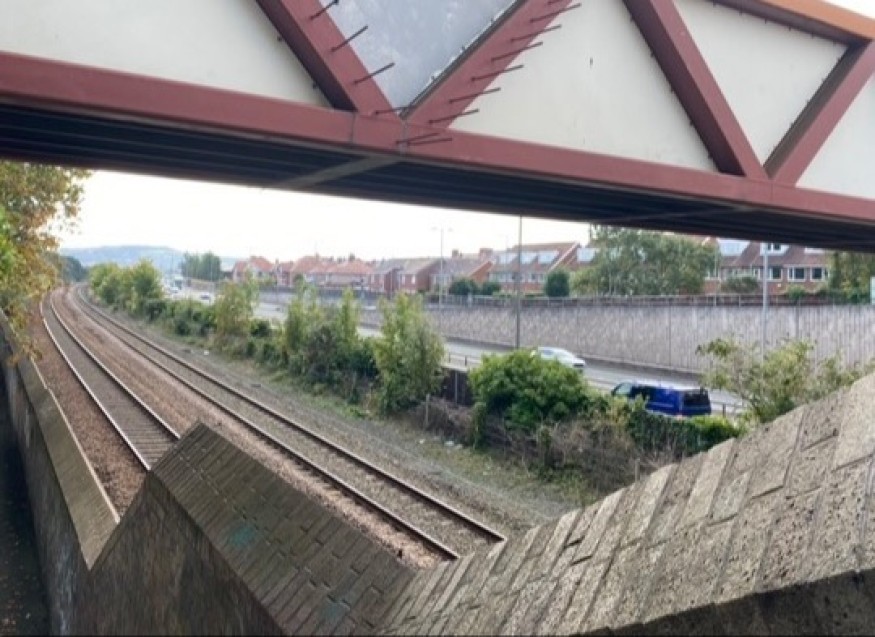
Avanti operates the direct services between North Wales and London Euston, calling at stations including Holyhead, Bangor, Llandudno Junction, Colwyn Bay, Rhyl and Prestatyn before continuing through Chester and along the West Coast Main Line.
North Wales has already experienced reductions in the direct service. In December 2025, the Welsh Government raised concerns about the removal of the 19:32 direct service from Chester to London and a reduction to the Sunday Holyhead to London service. The Welsh Transport Secretary at the time warned that the changes would make journeys less convenient for passengers from North Wales and could affect business and tourism connections.
There have also been more immediate problems for passengers. Avanti's own performance report identified ageing railway infrastructure, temporary speed restrictions, traincrew issues and rolling-stock reliability among the factors affecting performance. In September, for example, a shortage of available trains resulted in one early-morning Holyhead to London service starting at Crewe instead, meaning passengers at Holyhead, Bangor, Llandudno Junction, Colwyn Bay, Rhyl, Prestatyn and Chester could not board that particular service.
The problems are not all within Avanti's control. The West Coast Main Line is a heavily used railway and disruption can result from Network Rail infrastructure problems, engineering work, signalling, power supplies and incidents elsewhere on the network.
The government says the move into public ownership will be accompanied by an improvement programme. It has announced an additional £10 million for power and signalling maintenance, on top of £840 million already pledged for improvements to the West Coast Main Line. A further £50 million is being invested in improvements at London Euston, with other stations on the route due to receive £10 million by the end of 2027.
Timetable changes are also planned, with the government saying the aim is to make services faster and more reliable, particularly on journeys into and out of Manchester.
For North Wales, however, one of the important questions will be what public ownership means for the frequency and reliability of the direct London service.
There is already a separate programme of improvements to rail services in North Wales. Transport for Wales introduced a substantially revised timetable in May 2026, increasing services on the North Wales Coast Line by around 50%, including an hourly Llandudno to Liverpool service and an extension of the hourly Manchester Airport to Holyhead service.
That means passengers will have to look at the two parts of the railway separately. Transport for Wales operates the majority of local and regional services in North Wales, while Avanti provides the long-distance direct connection to London.
The March change will therefore not mean that every train service in North Wales suddenly becomes publicly operated. Instead, responsibility for Avanti's contracted services will move from the current private joint venture between FirstGroup and Trenitalia to the government's public-sector rail operating structure, ahead of the planned creation of Great British Railways.
Avanti says it will work with the government over the coming months to ensure a smooth transfer, while continuing to operate its services under the existing arrangements until the change takes place.
For passengers in North Wales, the test will ultimately be a straightforward one: whether trains turn up when they are supposed to, whether cancellations become less frequent, and whether the direct London connection remains a reliable option for people travelling from communities along the North Wales coast.
Public ownership changes who runs the service. It does not, by itself, solve the underlying problems of an ageing and heavily used railway. The government's investment in infrastructure, the future timetable and how the new public operator manages trains, staff and disruption will determine what passengers actually experience after March.