March 20, 2026 - 1024 views
A stark warning on the accelerating pace of climate change has been delivered in North Wales, as a leading geologist told members of the Rotary Club of Llandudno that the planet is moving beyond safe environmental limits.
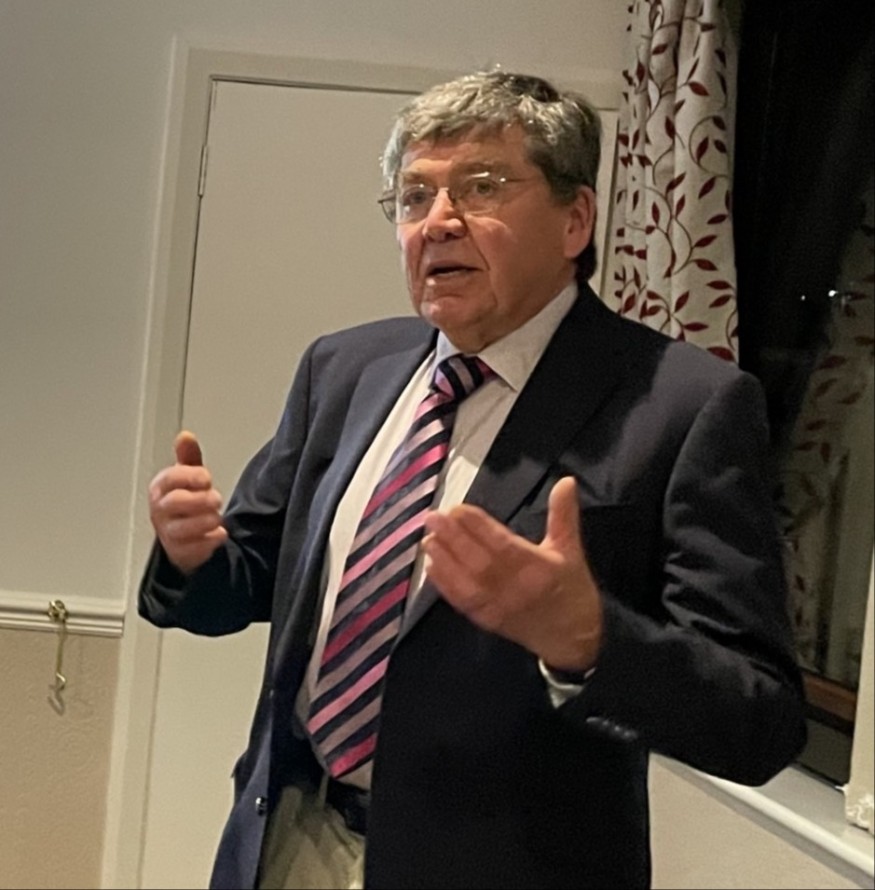
Dr Chris Burgess, who has spent decades studying geology around the world, gave a presentation titled “On Thin Ice”, highlighting how human activity is driving changes to the Earth’s atmosphere at an unprecedented rate.
He pointed to the latest figures showing atmospheric carbon dioxide levels have now reached 428 parts per million, far above the widely accepted “safe” level of 350 ppm — a threshold scientists say is necessary to maintain a stable climate.
Speaking in Llandudno, Dr Burgess explained that while the Earth has always experienced natural climate shifts, the current pace of change is unlike anything seen before. He compared today’s emissions to a scenario where volcanic activity is happening on a global scale — but compressed into decades rather than millions of years.
In a striking reminder of how long the issue has been understood, Dr Burgess referenced a warning published as far back as 1912, which predicted that burning fossil fuels would increase carbon dioxide in the atmosphere and warm the planet.
He explained that for hundreds of millions of years, natural processes locked carbon away in fossil fuels such as coal, oil and gas — helping to cool the Earth and allow ice caps to form. In just two centuries, humans have reversed that process by extracting and burning those fuels at scale.
Closer to home, Dr Burgess warned that climate change could have very real consequences for coastal communities in North Wales. Rising sea levels could eventually cause groundwater to rise beneath low-lying areas, potentially leading to flooding from below ground in parts of Llandudno.
Such changes, he said, could force difficult and costly decisions in the future — from installing major water management systems to potentially abandoning vulnerable areas altogether.
Dr Burgess outlined several key steps needed to slow climate change, including a shift towards renewable and nuclear energy, reducing reliance on fossil fuels, introducing carbon capture technology, and rethinking agriculture — particularly the impact of methane emissions from meat production.
However, he expressed concern that progress may be too slow, pointing to the high costs involved and a lack of long-term political planning.
He questioned the sustainability of continued economic growth in a world with finite resources, suggesting that meaningful change would require a significant shift in how societies operate.
Dr Burgess, who has worked in locations ranging from Antarctica to the Middle East, said it was during research in Antarctica in the 1970s that he first became aware of the scale of climate change.
Now based in North Wales, he continues to share his knowledge with local audiences — bringing global scientific insight to community discussions.
His message to the audience was clear: climate change is no longer a distant or abstract issue, but one that is accelerating quickly and will have direct impacts on communities like those in North Wales if action is not taken.