February 27, 2026 - 191 views
A multi-million-pound investment is set to put North Wales at the forefront of a fast-growing global farming sector — dairy sheep.
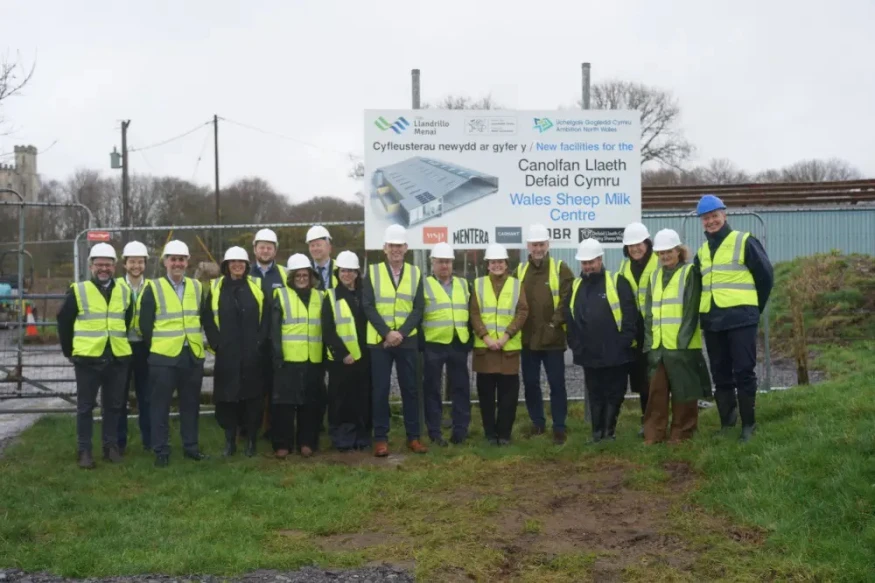
The new Dairy Sheep Wales initiative will see a dedicated sheep milk innovation and processing centre built at the Grŵp Llandrillo Menai campus at Glynllifon, near Caernarfon.
Backed by £3.5 million from the North Wales Growth Deal, alongside £1 million from the Welsh Government and £200,000 from the college group itself, the £4.7 million project will create a state-of-the-art facility focused on sheep milking, product development, skills training and business support.
The scheme forms part of the wider £19.2 million Glynllifon Rural Economy Hub — one of several major projects delivered through the Growth Deal by Ambition North Wales. The Growth Deal is a £1 billion programme designed to strengthen the region’s economy, with £240 million jointly funded by the UK and Welsh governments.
Although Wales is home to millions of sheep and a proud sheep farming tradition, it has never developed a large-scale dairy sheep sector. Yet globally, demand for sheep milk products — including specialist cheeses, yoghurt and infant formula — is rising steadily. Countries such as France, Spain and Greece have well-established industries, but production in parts of Europe has declined in recent years.
Supporters say Wales’ climate and grass-based farming systems make it well suited to sheep milk production, offering farmers an opportunity to diversify income at a time when traditional livestock sectors face rising costs and uncertainty following post-Brexit agricultural reforms.
The new centre at Glynllifon aims to bridge a long-standing gap in Wales — providing the research, processing facilities and technical knowledge needed to turn sheep milk from niche activity into viable commercial sector.
The project is expected to create 42 new jobs, work with at least 80 businesses and provide 185 training opportunities. Forecasts suggest it could generate between £10 million and £20 million in additional economic value for the region.
Gwenllian Roberts, Executive Director of Commercial Development at Grŵp Llandrillo Menai, said the investment was about more than buildings.
“This is about creating new opportunities for farmers, supporting innovation and building the skills needed to develop a sustainable and competitive sheep milk sector,” she said.
Cllr Julie Fallon, lead member for the Growth Deal’s agri-food and tourism programme, described it as an example of how the Deal supports key regional industries such as agriculture.
Deputy First Minister Huw Irranca-Davies said it represented a “once in a generation opportunity” to rethink the future of sheep farming in Wales, helping keep farming families on the land while responding to changing markets.
Wales Office Minister Anna McMorrin added that tapping into growing global demand would help create jobs and strengthen the rural economy in North Wales.
Agriculture remains a cornerstone of the North Wales economy, particularly in Gwynedd, Conwy and Anglesey. However, many upland sheep farms operate on tight margins. Diversification — from renewable energy to farm shops and tourism — has become increasingly important.
Dairy sheep farming could offer another option, producing higher-value products from smaller flocks and potentially supporting shorter supply chains and artisan food production.
By bringing together education, research and commercial expertise at Glynllifon, backers hope North Wales can establish itself as a centre of excellence in a sector still in its infancy in the UK.
If successful, Dairy Sheep Wales could see the region better known not just for lamb — but for premium Welsh sheep milk products on shelves at home and abroad.