January 09, 2026 - 1535 views
A senior politician has criticised Conwy County Council’s decision to divert a major UK Government funding package to parts of Llandudno, warning that other highly deprived communities have been unfairly overlooked.
At a meeting this week, the council’s Cabinet voted to allocate the multi-million-pound cash injection — which will be spread over 10 years — to deprived areas of Llandudno, instead of alternative neighbourhoods elsewhere in the county.
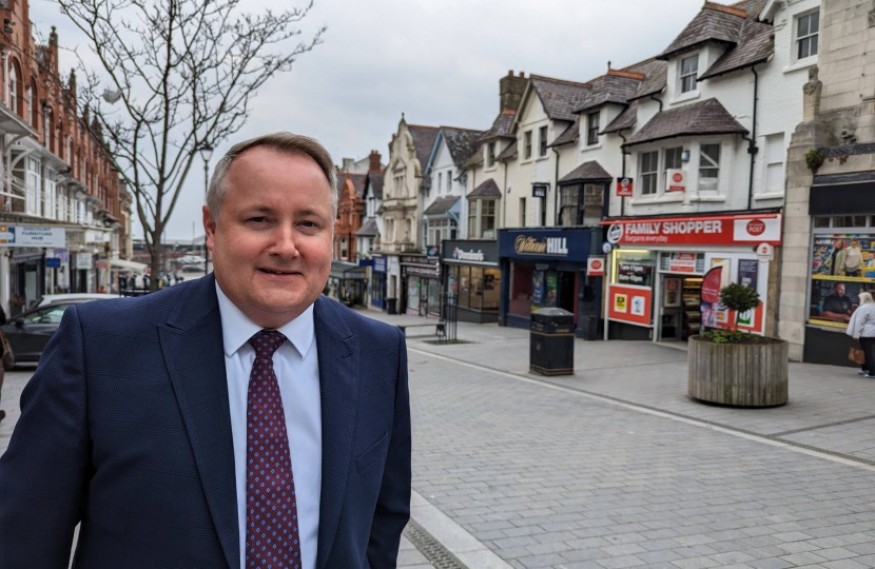
In a formal submission to the council, Clwyd West MS Darren Millar put forward three different options for where the funding could be targeted, all of which he said would deliver strong social and economic impact.
The first proposal, Conwy East Coastal, covered a wide coastal belt including Abergele and Pensarn, Pentre Mawr East, Belgrano, Towyn and deprived parts of Kinmel Bay.
His second option, Bay of Colwyn Arc, focused on large parts of the Bay of Colwyn and Llysfaen, including Llysfaen, Old Colwyn East, Upper Eirias, Glyn and Rhiw.
A third option, Colwyn East and Rural, proposed a smaller area within the Bay of Colwyn Arc, including Llysfaen, Old Colwyn East and Upper Eirias.
Mr. Millar also challenged the basis on which the council made its decision, arguing that it had relied on an incorrect interpretation of UK Government guidance. In particular, he said the council wrongly believed neighbourhoods within constituencies that already contain a Phase One ‘Pride in Place’ town were ineligible for further funding.
He said guidance published by the Ministry of Housing, Communities and Local Government makes clear that this restriction does not apply in Wales, which operates under different criteria to England and Scotland.
He also raised concerns that the council had unnecessarily limited its assessment to neighbourhoods of around 5,000 residents, despite UK Government guidance allowing areas of between 5,000 and 15,000 people to be considered — and even smaller neighbourhoods where there is a strong case.
As a result, Millar said, areas with comparable or higher levels of deprivation and much larger populations had been excluded from consideration.
Following the Cabinet decision, he was “deeply disappointed” by the outcome.
“They appear to have undertaken an unnecessarily restricted review of the potential neighbourhoods that could benefit from this much needed investment based on incorrect interpretation of the UK Government guidance,” he said.
“The alternative neighbourhoods I put forward have comparable, and in some cases greater, levels of deprivation, significantly larger populations, and long-standing challenges.
“Given this outcome, the council now has a responsibility to set out a clear and credible plan for how it intends to invest in the neighbourhoods that have missed out.”
The funding decision will now shape investment in the chosen areas over the next decade.